Devonport-Takapuna Local Board




Climate change and resilience
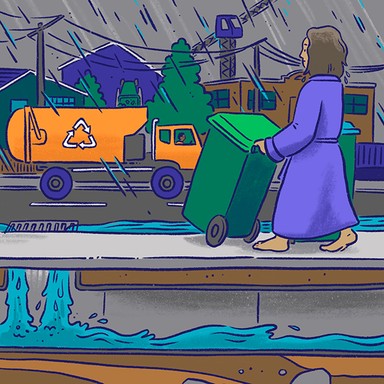
Climate change poses a huge challenge for communities as more frequent extreme weather events require us to rethink how we live and where. Local authorities are at the forefront of efforts to respond, with responsibilities for environmental planning and regulation, as well as civil defence. Many councils have plans to reduce emissions in their area and are working to help their communities adapt to a warming world.
Climate change and resilience
Climate change poses a huge challenge for communities as more frequent extreme weather events require us to rethink how we live and where. Local authorities are at the forefront of efforts to respond, with responsibilities for environmental planning and regulation, as well as civil defence. Many councils have plans to reduce emissions in their area and are working to help their communities adapt to a warming world.
Retain open spaces and trees as a key element of climate resilience.
Ensure that housing is appropriately situated to avoid flood risk.
Invest in effective early warning systems and ensure that these are taken seriously.
Stop wasting ratepayers' money on emissions cuts and focus on core local services, not climate activism.
Remove emissions considerations from all council decisions and consents and prioritise value for money.
Invest in stormwater systems and stop banks to protect homes, businesses and communities from severe weather.
Support the continuation of electric buses and ferries to reduce atmospheric carbon pollution.
Make certain that the council's plans for the future of flood-prone areas ensure the disasters of recent times do not repeat themselves.
Collaborate with the community to develop relevant response plans that are robust and staffed by staff trained in safe and prompt delivery.
Advocate for stormwater and flood protection systems to safeguard homes, schools and businesses.
Support greener urban design to absorb rain, ease stormwater systems and build climate resilience.
Commit to council being carbon neutral.
Develop inclusive emergency, resilience and disaster plans for all Devonport/Takapuna communities.
Commit to improving the robustness of critical infrastructure and fight for the preservation of historical buildings.
Address urgent needs for improved stormwater design and treatment, following significant storms and serious local flooding.
Accelerate blue-green infrastructure including spongy parks, wetlands and tree canopy to manage stormwater and reduce flooding.
Expand nature-based shoreline adaptation to safeguard coastal areas from erosion, sea-level rise and storm surge.
Retain open spaces and trees as a key element of climate resilience.
Ensure that housing is appropriately situated to avoid flood risk.
Invest in effective early warning systems and ensure that these are taken seriously.
Stop wasting ratepayers' money on emissions cuts and focus on core local services, not climate activism.
Remove emissions considerations from all council decisions and consents and prioritise value for money.
Invest in stormwater systems and stop banks to protect homes, businesses and communities from severe weather.
Support the continuation of electric buses and ferries to reduce atmospheric carbon pollution.
Make certain that the council's plans for the future of flood-prone areas ensure the disasters of recent times do not repeat themselves.
Collaborate with the community to develop relevant response plans that are robust and staffed by staff trained in safe and prompt delivery.
Advocate for stormwater and flood protection systems to safeguard homes, schools and businesses.
Support greener urban design to absorb rain, ease stormwater systems and build climate resilience.
Commit to council being carbon neutral.
Develop inclusive emergency, resilience and disaster plans for all Devonport/Takapuna communities.
Commit to improving the robustness of critical infrastructure and fight for the preservation of historical buildings.
Address urgent needs for improved stormwater design and treatment, following significant storms and serious local flooding.
Accelerate blue-green infrastructure including spongy parks, wetlands and tree canopy to manage stormwater and reduce flooding.
Expand nature-based shoreline adaptation to safeguard coastal areas from erosion, sea-level rise and storm surge.
Mayor
Compare the mayoral candidates in your area
Local council
Compare the candidates for your city or district council
Regional council
Compare the candidates for your regional council
Local board
Compare the candidates for your local or community board